

Scientific Program – ART/IVF/InfertilityFriday, November 13 & Saturday, November 14, 2026 |
 |
Friday, November 13
| 08:30-10:00 | ARTIFICIAL INTELLIGENCE (AI) | HALL A |
| Capsule | Could artificial intelligence take over aspects of clinical management? | |
| Chairpersons | Frank Broekmans, Netherlands Efstratios Kolibianakis, Greece |
|
| 08:30-09:00
08:30 |
Debate: Any place for AI in ovulation induction Yes: Konstantinos Dafopoulos, Greece |
|
| 09:00-09:15 |
New developments in the use of AI for ovarian stimulation |
|
| 09:15-09:20 |
Discussion |
|
| 09:20-09:35 | Day 3 compared to day 5 Raoul Orvieto, Israel |
|
| 09:35-09:40 |
Discussion |
|
| 09:40-09:55 | Deep learning versus manual morphology-based embryo selection in IVF: Results of the largest published RCT Christos Venetis, Greece |
|
| 09:55-10:00 | Discussion | |
| 10:00-10:30 | Coffee break, visit the exhibition, and e-poster viewing |
| 10:30-12:00 | SURPRISE ME WITH… UNEXPECTED SOLUTIONS… | HALL A |
| Capsule | Hot controversial clinical issues | |
| Chairpersons | Jacques Donnez, Belgium Paul Pirtea, France |
|
| 10:30-10:45 |
The surprising results of the optimal follicular size before trigger: What AI reveals? |
|
| 10:45-10:50 |
Discussion |
|
| 10:50-11:20
10:50 |
Debate: Stem cells or surgery for Asherman syndrome? Operation, even in extreme cases – what are the limits? Ettore Cicinelli, Italy |
|
| 11:20-11:35 | Double trigger compared to IVM Raoul Orvieto, Israel |
|
| 11:35-11:40 | Discussion | |
| 11:40-11:55 | Istmocele: When to treat before a new pregnancy and when not Ettore Cicinelli, Italy |
|
| 11:55-12:00 | Discussion | |
| 12:00-12:05 | Change of session |
| 12:05-12:30 | PLENARY SESSION | HALL A Streamed to all halls |
| Capsule | PCOS is the most common endocrinopathy that affect all phases of women’s life | |
| Chairpersons | Bart Fauser, Netherlands Joop Laven, Netherlands |
|
| 12:05-12:30 | PCOS in OBGYN (overview of PCO in reproductive life, menopause, pregnancy etc) Terhi Piltonen, Finland |
|
| 12:30-12:35 | Change of session |
| 12:35-13:35 |
Industry supported session – Hall B |
| 13:35-14:30 | Lunch break, visit the exhibition, and e-poster viewing |
| 14:30-15:30 | IMPLANTATION FAILURE | HALL A |
| Capsule | RIF: Aneuploidy is the main reason, while all other reasons are infrequent and correctable. | |
| Chairpersons |
Zion Ben Rafael, Israel |
|
| 14:30-14:40 |
Ethnic disparities in IVF success, implications to treatment personalization |
|
| 14:40-14:45 | Discussion | |
| 14:45-15:15
14:45 |
Debate: What is the origin of implantation failure? Euploidy is crucial and is age-dependent: Paul Pirtea, France |
|
| 15:15-15:25 |
Immunological factor – Endometrial profiling and LBR (RCT) |
|
| 15:25-15:30 | Discussion | |
| 15:30-15:35 | Change of session |
| 15:35-17:00 | SIMPLE LESS EXPENSIVE IVF? | HALL A |
| Capsule | Should we adopt more simple, affordable IVF and prevent expensive, additional unproven add-ons? | |
| Chairpersons |
Basil Tarlatzis, Greece |
|
| 15:35-15:50 |
Modern IVF settings: is the cost rising while the chances are falling? |
|
| 15:50-15:55 | Discussion | |
| 16:40-16:55 | Low-resource setting, high IVF results: From scientific validation to global reproductive justice Willem Ombelet, Belgium |
|
| 16:10-16:15 | Discussion | |
| 16:15-16:35 |
After how many IVF failures should we adopt add-ons? |
|
| 16:35-16:40 | Discussion | |
| 16:40-16:55 | Progestin-based ovarian stimulation vs, GnRh analogues Paul Pirtea, France |
|
| 16:55-17:00 | Discussion | |
| 17:00-17:20 | Coffee break, visit the exhibition, and e-poster viewing |
| 17:20-18:30 | MANAGEMENT OF UTERINE FIBROIDS | HALL A |
| Capsule |
Fibroids that distort the uterine cavity are likely to affect fertility however the effect of non-cavity distorting intramural fibroids on fertility is still debated. Does their presence lower the chance of achieving a live birth? |
|
| Chairpersons |
Ettore Cicinelli, Italy |
|
| 17:20-17:40
17:20 |
Debate: Intramural fibroids should be enucleated before IVF Yes: Nikolaos Vlachos, Greece |
|
| 17:40-17:55 |
Hysteroscopic management of submucous fibroids: Techniques and limitations |
|
| 17:55-18:10 | Which fibroids should be removed before in vitro fertilization? Angelos Daniilidis, Greece |
|
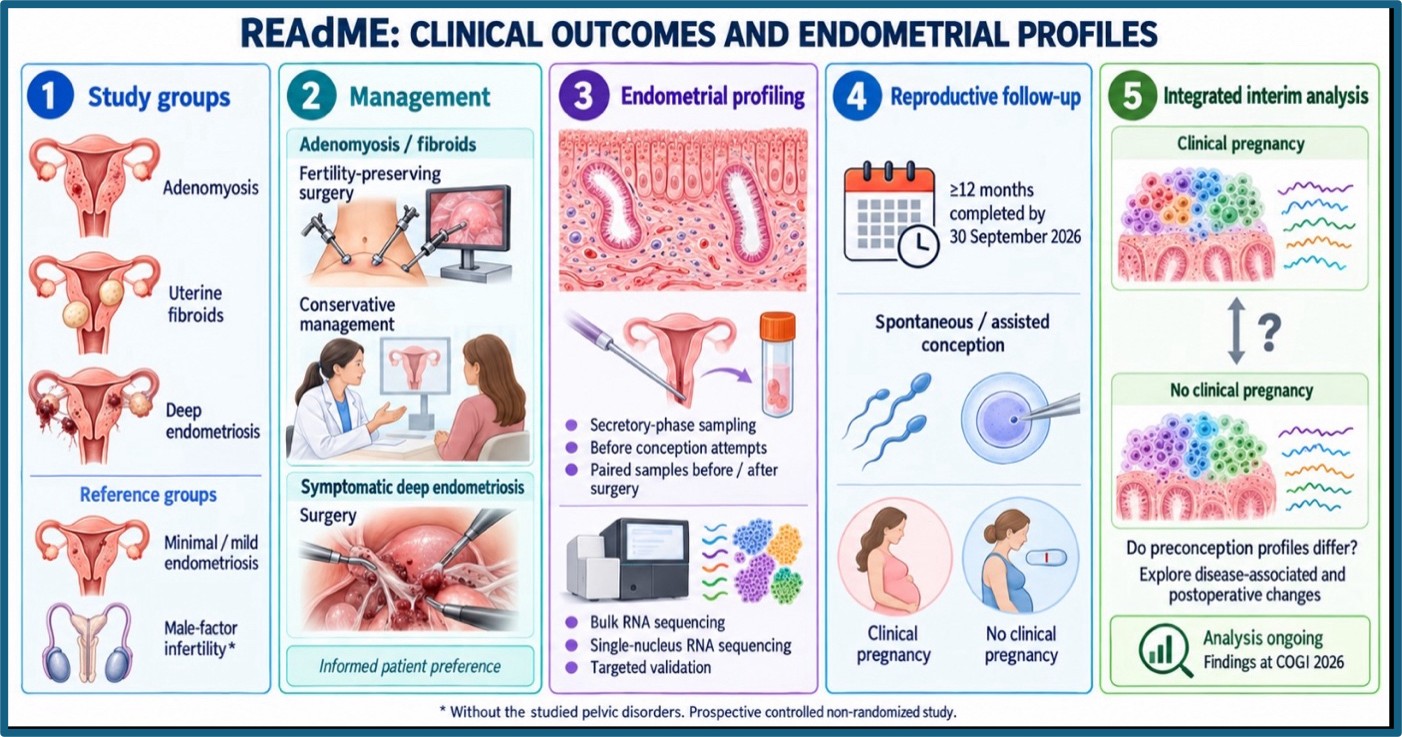
| 18:10-18:25 | Endometrial receptivity and reproductive outcomes in adenomyosis, fibroids and endometriosis: Interim insights from the readme study Michal Mára , Czech Republic |
|
| 18:25-18:30 | Discussion | |
Saturday, November 14
| 08:30-10:00 | PMOS – THE NEW PCOS | HALL A |
| Capsule | It is important to get the new name promoted and implemented | |
| Chairpersons | Bart Fauser, Netherlands Basil Tarlatzis, Greece |
|
| 08:30-08:55 |
Name change: Patients perspective |
|
| 08:55-09:00 | Discussion | |
| 09:00-09:25 |
Name change: The health care providers perspective |
|
| 09:20-09:30 | Discussion | |
| 16:40-16:55 | Polyendocrine Metabolic Ovarian Syndrome (PMOS): The new Polycystic Ovarian Syndrome (PCOS): Dissemination and next steps Joop Laven, Netherlands |
|
| 09:55-10:00 | Discussion | |
| 10:00-10:30 | Coffee break, visit the exhibition, and e-poster viewing |
| 10:30-12:00 | PGT-A | HALL A |
| Capsule | An ASRM statement, grounded in over 30 years of experience and multiple randomized controlled trials demonstrating no clinical improvement in IVF outcomes with the use of PGT-A, nevertheless PGT-A sharply increase in utilization | |
| Chairpersons | Norbert Gleicher, USA Laura Rienzi, Italy |
|
| 10:30-10:45 |
The cost-effectiveness of re-biopsy and post-cryopreservation biopsy in PGT-A cycles |
|
| 10:45-10:50 | Discussion | |
| 10:50-11:20
10:50 |
Debate: Claims of lower miscarriage rate and speed up of the time to pregnancy Pro: This justifies the cost and utilization of PGT-A! Christos Venetis, Greece |
|
| 11:20-11:35 |
Invasive vs Noninvasive PGT -A: From cell DNA to cell – free DNA |
|
| 11:35-11:40 | Discussion | |
| 11:40-11:55 |
Is there a potential legal danger for physicians to be sued for performing PGT-A? |
|
| 11:55-12:00 | Discussion | |
| 12:00-12:05 | Change of session |
| 12:05-12:30 | PLENARY SESSION | HALL A Streamed to all halls |
| Capsule | Epigenetics and reprogramming research in infertility and in utero development focuses on how DNA methylation, histone modification, and RNA interact during gametogenesis, early embryogenesis and placentation, disruption of which causes infertility and pregnancy complications | |
| Chairpersons | Rene Frydman, France Mina Popovic, Spain |
|
| 12:05-12:30 | Epigenetics and reprogramming David Monk, UK |
|
| 13:35-14:30 | Lunch break, visit the exhibition, and e-poster viewing |
| 13:30-15:00 | Q&A | HALL A |
| Capsule | Experts’ views on controversial and unsolved clinical and laboratory questions | |
| Chairpersons | Zion Ben Rafael, Israel Bart Fauser, Netherlands |
|
| Discussants | Laura Rienzi, Italy Rita Vassena, Spain Basil Tarlatzis, Greece Paul Pirtea, France |
|
|
Questions to the panel Embryology
Clinical aspects of IVF
|
||
| 15:00-16:30 | OVULATION STIMULATION | HALL A |
| Capsule | Basic issues in ovulation stimulation are still not resolved | |
| Chairpersons |
Zion Ben Rafael, Israel |
|
| 15:00-15:25 |
Personalization of ovarian stimulation, do we need to base it on age and Markers of ORT |
|
| 15:25-15:30 | Discussion | |
| 15:30-16:00
15:30 |
Debate: How important is the choice of gonadotropins and monitoring during stimulation? It is important: Evangelos Makrakis, Greece |
|
| 16:00-16:30
16:00 |
Debate: Mild ovarian stimulation for patients with diminished ovarian reserve (DOR): Myth or reality? Higher doses will increase oocyte yield Frank Broekmans, Netherlands |
|